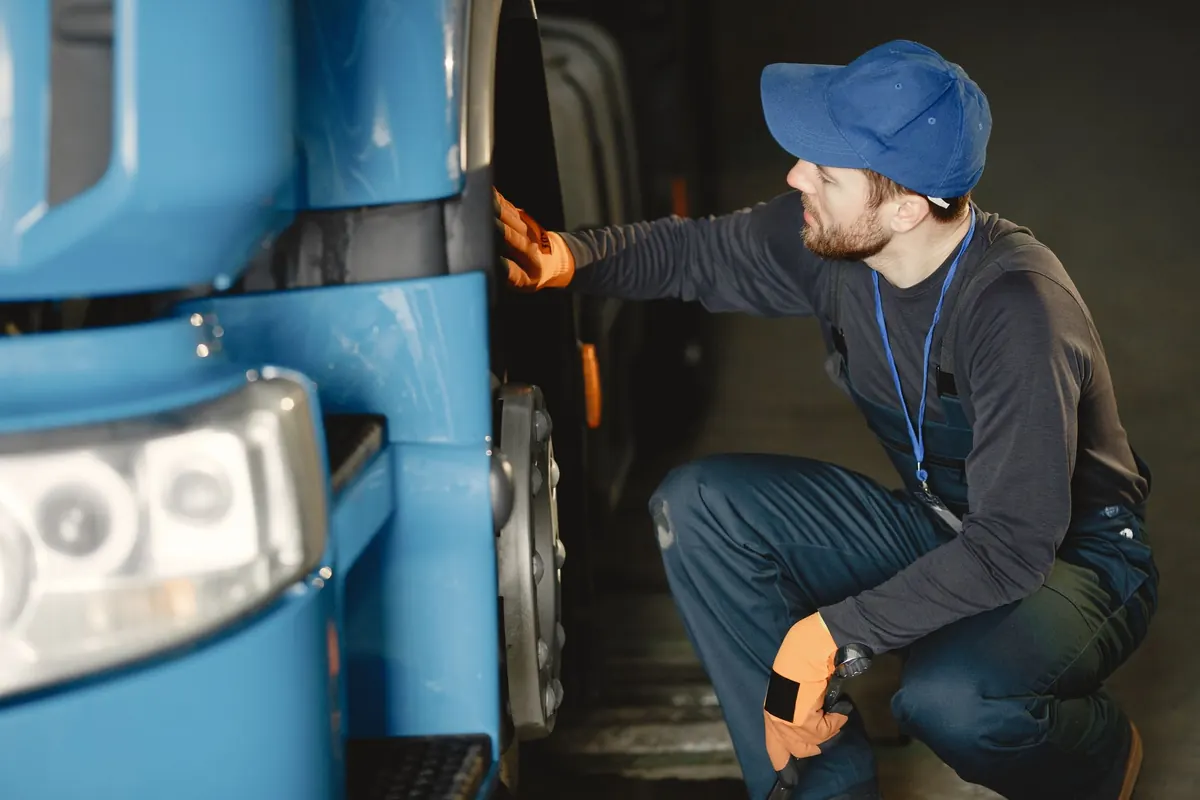
A pre-trip inspection in July is mostly about what's loose. In January it's about what's frozen, cracked, drained, or half-empty. Cold doesn't create new problems so much as it exposes the ones you already had — a battery that was marginal in October, a water separator you skipped last week, a tire that's been slowly bleeding air since the last load. The good news is that winter inspections follow a rhythm. Do them the same way every time, in the same order, and you'll catch the expensive stuff before it catches you on a shoulder at 20 degrees with the wind blowing.
Here's what to check before you roll, and why each item matters when the temperature drops.
Batteries and Charging System
Cold weather is hardest on the battery. It takes more cranking power to turn over a cold engine, while the battery itself is producing less. That math doesn't work in your favor, so a battery that's merely "okay" in fall becomes a no-start in a January cold snap.
Start with a visual pass. Look for corrosion on the terminals and clamps, cracks or bulging in the case, and loose hold-downs. A battery bouncing around in a rough lot can crack a case or chafe a cable. Check that the cables are tight and the grounds are clean — a poor ground will mimic a dying battery.
Quick checks that pay off
- Test with a load tester or a proper conductance tester rather than trusting a voltage reading alone.
- Inspect the alternator belt for glazing, cracking, and correct tension.
- If the truck has a block heater, battery blanket, or oil pan heater, plug in when you can and confirm the cords and plugs aren't frayed.
- Turn off lights, fans, and accessories before shutdown so you're not borrowing cranking power from yourself.
Air Lines, Dryer, and Brake System
Moisture in an air system is a nuisance in summer. In winter it's a road call. Water settles in low spots, freezes overnight, and blocks the line or the valve it's sitting in.
Drain the air tanks — wet tank, primary, and secondary — at the end of the day, not just in the morning. That's when the moisture is most likely to come out as liquid instead of sitting as ice you can't blow off. Make sure the air dryer is working and that the cartridge isn't overdue; a saturated dryer sends water straight into the system.
Walk the lines and look for chafing, cracks, and contact points where a line has been rubbing against a frame rail or a crossmember. Cold makes rubber stiff and brittle, so a line that's been nicked all year can split the first time it flexes. Check the gladhands and seals, and confirm trailer lines aren't dragging or routed tight enough to kink when the trailer turns.
Then run the air brake check properly: build pressure to governor cut-out, shut the engine off, and watch for excessive leakage. Confirm the low-pressure warning works and that the spring brakes set and release as they should. Trailer spring brakes that won't release because of ice in a valve will end your day before you leave the yard.
Fuel: Gelling, Water, and Filters
Diesel doesn't like cold. As temperatures fall, wax crystals form in the fuel, and at some point they plug the filter and starve the engine. Winter-blended fuel is formulated for the season, but blends vary by region and by how early the cold arrives, so don't assume you're covered.
Treat fuel with an anti-gel before the cold hits, not after. Once the fuel has gelled in the filter, an additive poured into the tank may not help much. Keep the tanks above half when you can — more fuel in the tank means less room for condensation, and a fuller tank takes longer to reach gelling temperatures.
Drain the fuel/water separator daily. Water is heavier than diesel, it collects at the bottom, and it freezes into a plug. Carry a spare fuel filter and the tools to change it, and know where your fuel heater is and whether it's working.
Tires and Traction
Tire pressure drops in cold weather — roughly a pound or so for every ten degrees the temperature falls — so tires that were fine last week can be noticeably soft this morning. Check pressure cold, with a gauge, on all positions. Don't lean on a dashboard monitoring system as your only check; sensors fail and they don't tell you about sidewall damage.
Look at the whole tire, not just the tread depth. Cold makes old rubber crack, so pay attention to sidewalls and tread shoulders for weather checking. Check valve stem caps, look for cuts and bulges, and check the spacing between duals for packed snow or ice that can rub the sidewalls. If you run chains, make sure they're on the truck, in good shape, and that you know how to install them before you need them in a storm.
Lights, Wipers, and Visibility
Short days mean you're running lights more often, and road spray means you're using wipers constantly. Walk the whole rig and check headlights, marker and clearance lights, turn signals, brake lights, and reflectors. A single dead marker light is a cheap fix in the yard and an expensive conversation on the roadside.
Fill the washer fluid with a winter-rated mix — summer fluid will freeze and can crack the reservoir or burn out the pump. Check wiper blades for hardness and streaking, confirm the defroster and heater are actually blowing hot air to the windshield, and make sure heated mirrors work. Clear snow and ice off the hood, roof, and trailer top before you move; sheets of it sliding forward at highway speed are a real hazard to the cars behind you.
Emergency Supplies Worth Carrying
Being stranded in winter is a different event than being stranded in June. Pack for the possibility that help takes hours, not minutes.
- Blanket or sleeping bag, extra gloves, hat, and dry socks
- Water and non-perishable food
- Working flashlight with spare batteries, plus a headlamp
- Phone charger and a charged power bank
- Sand, salt, or kitty litter for traction, and a shovel
- Warning triangles and flares or reflective markers
- Jumper cables or a jump pack
- Spare fuel filter, basic tools, and extra windshield washer fluid
- First aid kit and any personal medications
For anything involving your health or a medical condition, or legal questions about hours and equipment requirements, get advice from a qualified professional rather than relying on general guidance.
Make It a Habit, Not a Rush
The drivers who have the fewest winter breakdowns aren't luckier — they're just consistent. They run the same walk-around in the same order, every day, and they treat a schedule crunch as a reason to look harder rather than skip steps. Do the inspection where you can see, ideally in daylight, and note defects as you find them so nothing gets forgotten between the yard and the scale.
Winter gives you less margin for a worn battery, a wet air tank, or a soft tire. Ten focused minutes before you pull out buys you a lot of peace of mind when the temperature drops and the next stop is a long way off.
Photo: Gustavo Fring / Pexels