A loaded trailer and a seven percent grade are a poor combination in July. In January, with a fresh dusting over yesterday's ice, they are a test of everything you did before you turned the key. Mountain pass driving is not one skill. It is a set of habits: knowing the chain rules for the state or province you are crossing, choosing when to cross, checking the brakes before the descent rather than halfway down it, and having a plan for the moment something stops working. None of it is difficult. All of it has to happen before you need it.
Chain Laws Change With Every Border
Chain requirements are set locally, and they vary more than most drivers expect. Signage on the approach may require chains for vehicles over a certain weight, or it may allow approved alternatives such as automatic traction devices. Some corridors require you to carry chains during a defined winter season whether or not the road is bare. Others require chains on drive axles only; some require them on a trailer as well. The posted sign and the transport department's road report for that route are the authority — not what worked on a different pass last month.
Carrying chains you have never fitted is the same as not carrying them. Buy the right size for your tyre dimensions and axle setup, and practise in the yard on a dry day: lay them out flat, fit them with gloves on, and do it once in the dark with a headlamp. Twenty minutes the first time, five after that. Keep tensioners in the bag and a piece of old conveyor belt or a rubber mat to kneel on.
Pick a Weather Window, Not Just a Route
Most high passes have a daily rhythm. The surface is coldest just before and just after dawn, which is when you find black ice on bridge decks, shaded curves and anywhere meltwater has run across the road. Mid-morning through early afternoon is usually the friendliest stretch: the sun has warmed the pavement, and afternoon convection has not yet arrived to drop graupel or wet snow on you.
Watch the forecast from more than one source, but trust the pass cameras and the road report most. Conditions on the summit can differ completely from the valley you are sitting in. A few hours parked at a truck stop beats a chain-up on a blind shoulder in the dark, so if your schedule has any slack in it, spend it.
Things that shrink your window
- Freezing rain or a rain-to-snow changeover in the forecast
- Any overnight refreeze after a warm day
- Heavy recreational or logging traffic in the same hours
- Road closures queued at the bottom, which clear in bursts
The Brake Check at the Top
Stop at the summit in a designated pullout or chain-up area, not on a shoulder on a blind curve. Ten minutes here is the cheapest insurance on the mountain. Walk the unit and look for:
- Air leaks — engine off, listen, and drain the tanks
- Slack adjuster travel and pushrod angle on every chamber
- Lining and drum condition, plus oil or grease on a shoe from a weeping seal
- Tyre pressures, cuts and sidewall damage
- Load securement, especially after a twisting climb
- Engine brake or retarder working, and set how you want it
Feel for heat near the wheel with care, and do not put your hand on a drum. If you find a problem, deal with it at the top. There is no good place to discover a dragging brake at highway speed on a downgrade.
Descent Technique: Gears First, Brakes Second
Select your gear at the top of the grade, not once you are rolling. As a rule, descend in the gear you would climb the hill in, and if the load is heavy or the grade is long, one lower. Then bring the engine brake in and let it carry the work.
- Set a target speed before you start down — one you have chosen, not one you discover.
- Control speed with the retarder and engine braking. Use the service brakes in short, firm applications to shave a few miles per hour, then get off them.
- Long, light drags on the pedal are what cook drums and fade linings.
- Watch the air gauge and the tachometer as closely as the road. Never coast in neutral.
On slick surfaces, be gentle with an engine brake: a sudden application can break traction on the drive axles. If you can smell hot brakes, or the pedal feels different, that is your warning. Pull over at the first safe place and let things cool on their own. Never spray water on hot drums, and never wind off a slack adjuster to "fix" a fade.
If the brakes smell at the top of the grade, the descent already started wrong.
Escape Ramps and Runaway Plans
Note the escape ramps and pullouts on the way up. Which side are they on? How far down? Deciding that while you still have brakes is easy; deciding it at speed with a fading pedal is not. If you do lose your brakes, downshift progressively, keep the retarder engaged, sound the horn and look for the ramp. When you find it, aim for the gravel and stay straight — do not try to steer around it. An arrestor bed is built to stop a loaded truck, and it is far better to be inspected in one than to reach the town at the bottom.
Winter Kit and a Stranded-Truck Plan
Weather can close a pass behind you as easily as in front of you. Carry a blanket or sleeping bag, water, food that does not need heating, spare gloves and socks, a headlamp, triangles or flares, sand or kitty litter, a scraper, and washer fluid rated for the cold. Keep a charger and a paper map in the cab.
If you get stuck, stay with the truck. Run the engine periodically for heat, but keep the exhaust pipe clear of snow — a buried tailpipe can push carbon monoxide into the cab. Tell your dispatcher your route and a check-in time, and stick to it.
Before You Climb: A Ten-Minute Routine
Run the same sequence every time, and it stops being a decision:
- Check the route, the chain requirements and the current road report.
- Look at the pass cameras and the forecast for the summit, not the valley.
- Fuel up, and top off washer fluid and DEF.
- Drain air tanks and listen for leaks.
- Walk the brakes, tyres and securement.
- Choose your descent gear and retarder setting at the top.
- Note the escape ramps.
- Confirm someone knows when you expect to be down the other side.
Do that consistently and the mountain stops being an emergency and becomes a procedure. Local rules and road conditions change with the season, so check the transport authority for the route you are running before you commit to it.
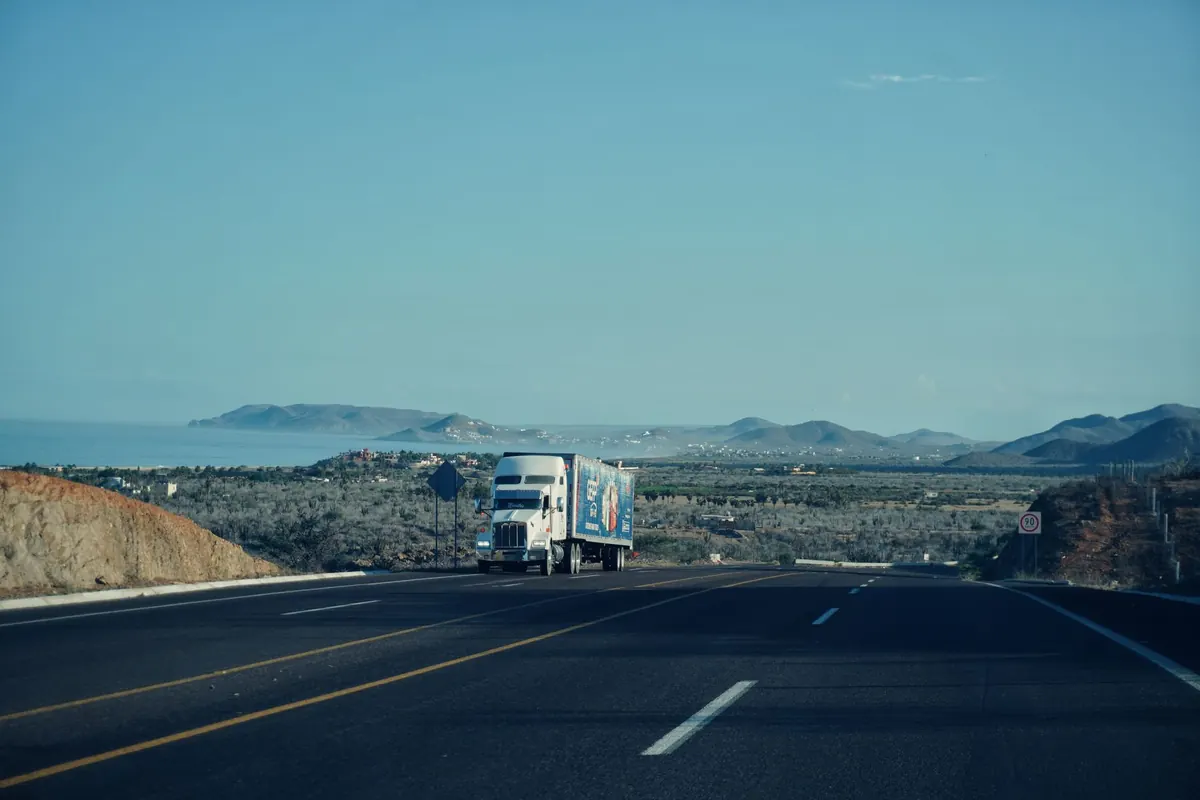
Photo: Omar Gerardo / Pexels